Anticipation
Tomorrow is Thanksgiving day, and my kids can already smell Christmas in the air. They are beginning to eagerly anticipate things like getting a Christmas tree, putting up the lights, presents, snow and everything else commonly associated with the Holiday.
From a purely commercial standpoint, the anticipation for the Christmas season has already been building for months. Most stores were clearancing their candy and costumes from Halloween shelves and setting up the displays for lights, ornaments, and wrapping paper before most trick-or-treaters were even done knocking on neighbors’ doors. “Muzak” has been piping through store speakers telling shoppers that it is “The Most Wonderful Time of the Year” for nearly as long, and “Black Friday” kicks off the Christmas shopping sales rush on Friday.
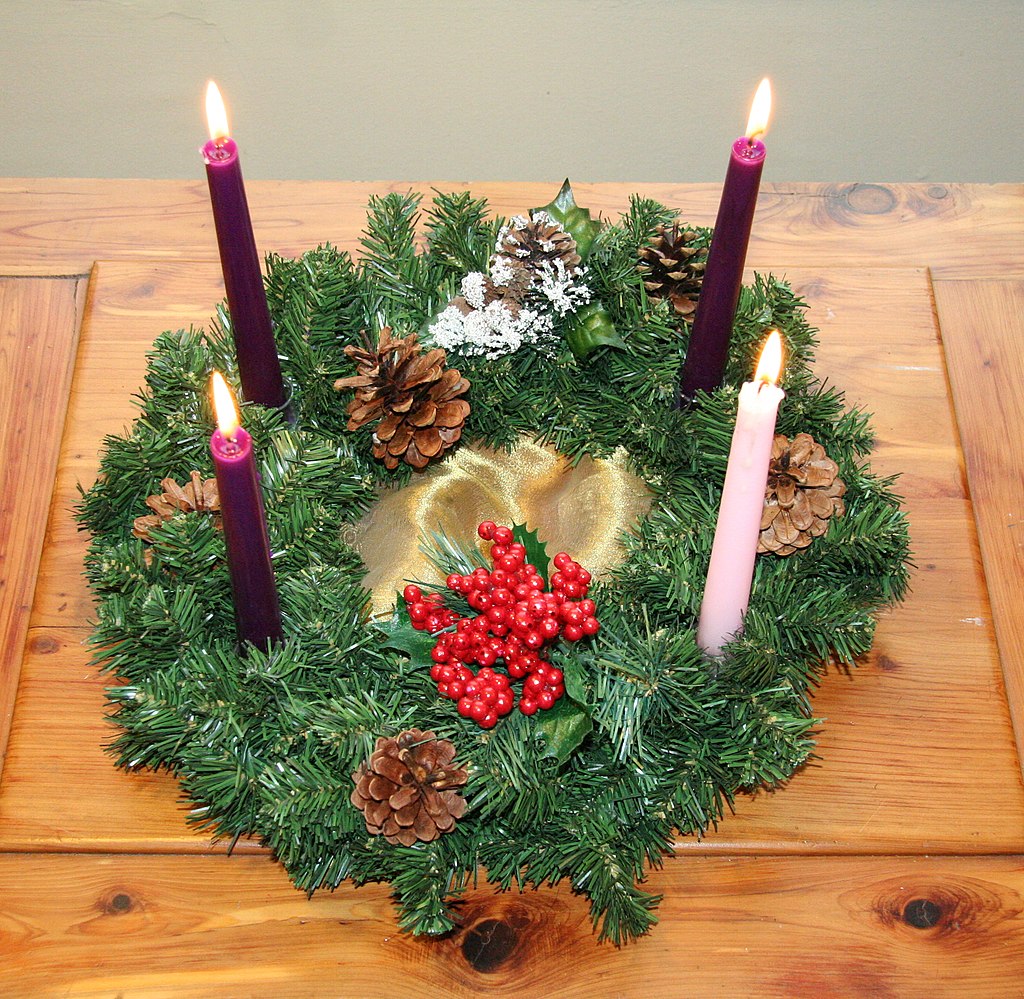
For many Christians, this Sunday begins the first day of Advent, a period for preparation for Christmas, but it is meant to be a preparation far different than that of a secular nature. So what exactly is Advent and why must we prepare ourselves for Christmas? Isn’t Christmas where we celebrate Jesus’ birthday, something that happened thousands of years ago?
Advent comes from the Latin word “adventus” which means “coming”. The Greek equivalent word is “parousia” which is used 24 times in the New Testament and means “coming, arrival, personal presence.” Most often it is used to describe the second coming of Jesus Christ. Something that Paul frequently wrote about with great anticipation, including the theme of Christ’s “coming/parousia/advent” in every single one of his letters except for Galatians and perhaps Ephesians.
So by the 6th century, Roman Christians had begun to connect Advent with the second coming of Christ Jesus as he would come to judge the world descending on the clouds. The celebration of Advent had little to nothing to do with the Christmas story, or a baby lying in a manger in the small town of Bethlehem.
However, during the Middle Ages Christians started to recognize that the Church was waiting for the promised coming of our redeemer, much in the way that Israel had before us. We are between two Advents. Advent symbolizes the present situation of the church in these “last days” (Acts 2:17, Hebrews 1:2), as God’s people wait for the return of Christ in glory to consummate his eternal kingdom. The church is in a similar situation to Israel at the end of the Old Testament: in exile, waiting and hoping in prayerful expectation for the coming of the Messiah. Israel looked back to God’s past gracious actions on their behalf in leading them out of Egypt in the Exodus, and on this basis, they called for God once again to act for them. In the same way, the church, during Advent, looks back upon Christ’s coming in celebration while at the same time looking forward in eager anticipation to the coming of Christ’s kingdom when he returns for his people.
Martin Luther said in his “Sermon for the Sunday after Christmas, 1522”
“Because the Law can give us neither justification nor faith, and nature with all its toil can gain us nothing, St. Paul now preaches Him who in our stead has won for us such faith, and who is a master in justification, for justification did not come to us easily, but at great cost, namely, it was paid by God’s own Son. Hence the Apostle writes “when the fullness of the time came,” that is, when the time of our bondage had come to an end.
For God’s ancient people that time was fulfilled with Christ’s advent in the flesh, and in like manner it is still being fulfilled in our daily life, whenever a person is illumined through faith, so that our serfdom and toil under the Law come to an end. For Christ’s advent in the flesh would be useless unless it wrought in us such a spiritual advent of faith. And verily, for this reason, He came in the flesh, that He might bring about such an advent in the spirit. For unto all who before or after believed in Him thus coming in the flesh, even to them He is come. Wherefore, in virtue of such faith, to the fathers of old His coming was ever present.
From the beginning of time to the end of the world everything must needs depend upon this coming, this advent, in the flesh, whereby humanity is set free from bondage, whensoever, wheresoever and in whomsoever such faith is wrought. And the fulness of time is come for every person when we begin to believe in Christ as the One whose advent was promised before all times and who has now come.”
~Martian Luther: Sermon for the Sunday after Christmas, 1522
The Advent Hymn “O Come, O Come, Emmanuel” encapsulates the attitude that the church should have during this season of Advent.
“O come, O come, Emmanuel,
 And ransom captive Israel,
 That mourns in lonely exile here
 Until the Son of God appears.
 Rejoice! Rejoice!

 Emmanuel shall come to thee, O Israel.”
Advent is supposed to be a time of fasting and reflection as we wait for the bridegroom to return. Israel could have sung the song looking forward to the expectation of Christ’s first coming, while the Church today can look back to that first coming and sing with longful anticipation for His coming return.
Dietrich Bonhoeffer said,
“The celebration of Advent is possible only to those who are troubled in soul, who know themselves to be poor and imperfect, and who look forward to something greater to come.”
As my kids begin to anticipate the coming Christmas day, I will be able to see them becoming more excited. There will be days as they begin to see the preparations for the Holiday, as we find a tree and set it up, as presents start to appear, as lights begin to decorate the neighborhood around us where they will barely be able to hold in their excitement.
I hope as we journey together through this Advent season, and the signs of our Advent celebration grow, that in a similar way you will begin to feel the anticipation of the coming Jesus.
Blessings,
Jory
 Reformed in Tualatin
Thanks, Jory – Just what I needed this morning. Blessings to you and your family. Eric
Sent from AOL on Android
LikeLike
Hello Eric! I am so glad my random musings could find their way to you and be a blessings. I pray you are richly blessed by God this Advent season!
LikeLike